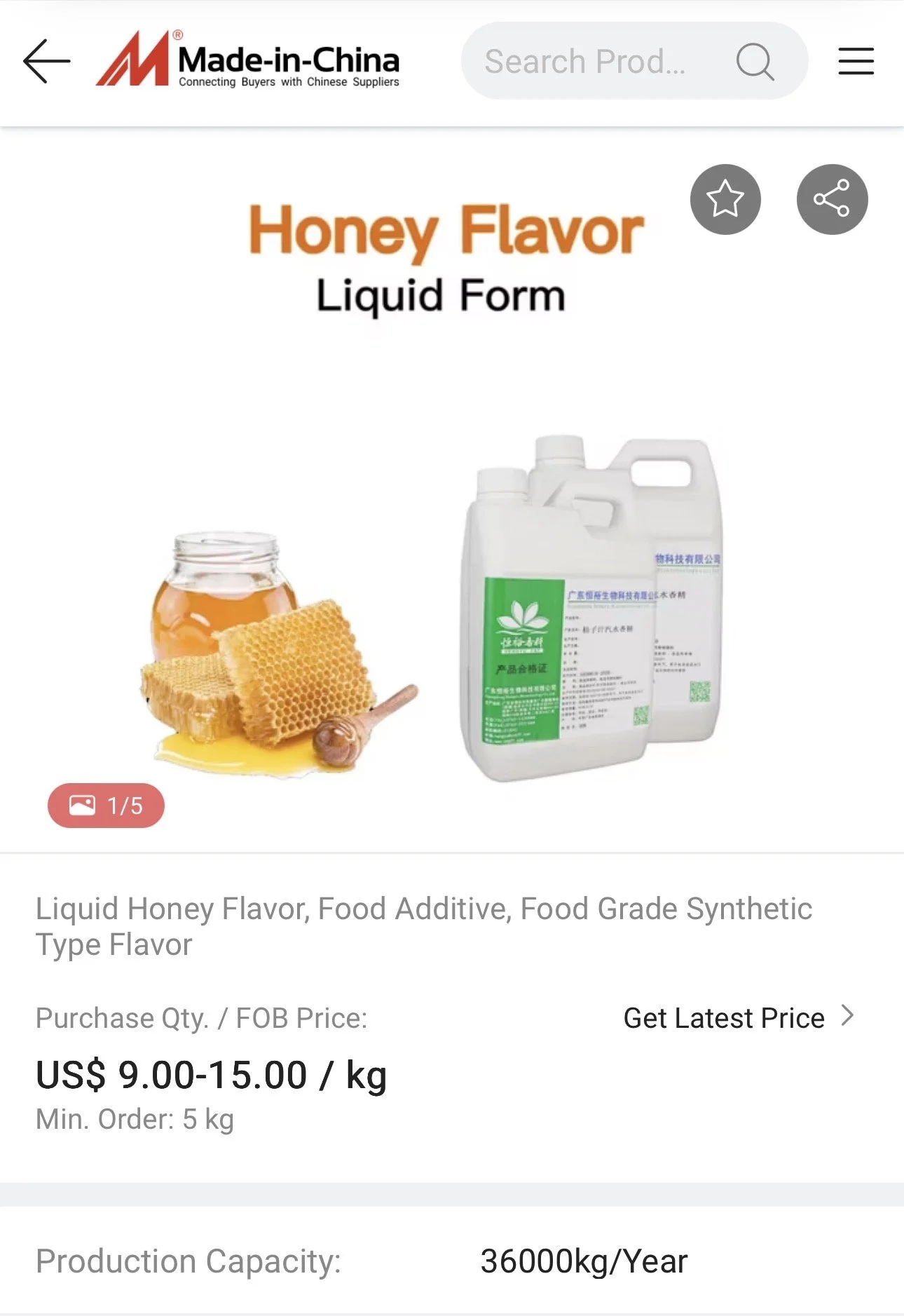
Why most shop-bought honey is fake
Today, much of the honey found on supermarket shelves bears little resemblance to genuine honey as nature intended. What is commonly sold as “honey” is increasingly an industrial product—processed, blended, and manipulated far beyond anything a bee would recognise.
An estimated 85% of honey sold in the UK is imported, with a significant proportion originating from large-scale industrial operations, predominantly in China.
It is widely reported that around 70% of this imported honey is adulterated or wholly synthetic, often produced using sugar syrups, rice syrup, corn syrup, or chemically altered sweeteners rather than being made naturally by bees.
Multiple independent investigations have uncovered troubling findings. Tests have identified residues of substances banned in the UK and EU, including antibiotics prohibited for use in food production.
In some cases, samples have also been found to contain heavy metals such as lead, and even arsenic, raising serious concerns about food safety, traceability, and consumer transparency.
Since 2016, 11 people have died eating fake honey.
In 2023, the European Commission conducted extensive authenticity testing on commercial honey sold across Europe. The results were stark: every sample that had been blended or packaged in Britain failed authenticity testing, with the honey’s true origins believed to lie overseas.
“We didn’t expect to find that all the samples were fake,” said Arturo Carrillo, a member of the investigating team.
The scale of the issue is substantial. The UK is now the largest importer of adulterated Chinese honey, importing approximately 47,000 tonnes in a single year, much of which ultimately reaches supermarket shelves under labels that suggest purity, provenance, and tradition.
In contrast, Gun Hill Honey remains exactly as the bees create it.
100% Real Honey. Unblended. Unheated. Untouched.
Each jar is shaped only by the land, the wildflowers, and the season in which it is harvested—nothing added, nothing removed. It is honey as it has always been: honest, traceable, and entirely natural.
Real honey isn't cheap and cheap honey isn't real.